Robot Mower Winterization: The Guide to Save Your Battery
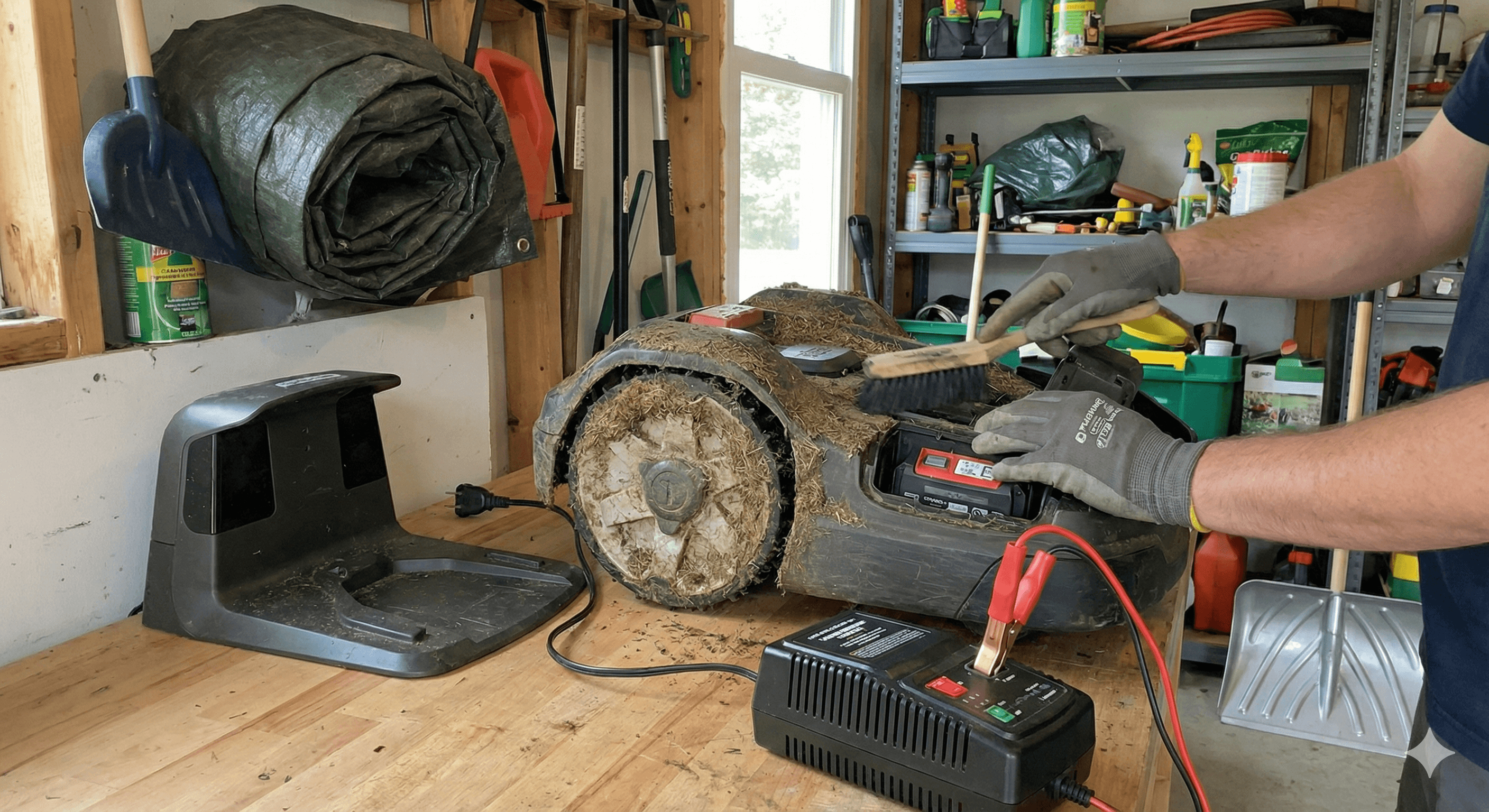
Robot Mower Wintering: The Ultimate Guide to Preserve Your Battery
Autumn is coming to an end, the grass stops growing, and the first morning frosts are appearing. It is time to put your faithful robotic gardener to rest. However, be careful not to make the classic mistake of simply turning it off and forgetting it in a corner of the garage. A botched wintering procedure is the almost certain guarantee of finding a "dead" battery in the spring, unable to hold a charge.
Wintering is a simple procedure, but one that requires rigor. As an expert, here is the precise methodology I apply every year to maximize the lifespan of my machines and avoid costly repairs.
Golden Rule: Never leave your robot sleeping outside if the temperature regularly drops below 5°C. Frost is the mortal enemy of Lithium-Ion chemistry.
The absolute rule of the "Last Charge"
Before even thinking about cleaning your robot, the first reflex must be to charge it. This is the most critical step of the entire process. A Lithium-Ion battery must absolutely never be stored empty. Why? Because even when turned off, a battery undergoes a natural phenomenon of self-discharge. If you store it with a low level, it risks dropping below its critical minimum voltage threshold during the winter. The BMS (the internal safety electronic circuit) will then permanently lock itself for safety, rendering the battery unusable. You would end up in March with a 150€ bill for an avoidable replacement.
So make sure the robot is 100% charged. Once the battery is full, remove it immediately from the station. Do not wait until the next day to proceed to the next step.
The Great End-of-Season Cleaning
It is out of the question to store a device clogged with residues of wet grass and earth. As it dries, the grass can ferment and become corrosive for plastics and seals, not to mention the unpleasant odors that will invade your storage place.
Imperatively start by turning off the robot via the main switch or by removing the safety key. Then, equip yourself with a stiff-bristled brush to meticulous scrape the casing and the chassis. Unless explicitly stated otherwise in your manual (valid for a few rare recent models), ban the water jet and the high-pressure washer which would risk drowning the electronics. For sensitive parts like charging connectors, cameras, or ultrasonic sensors, a simple damp cloth is sufficient. Take this moment to inspect your blades: if they are dull, throw them away. You will start on a sound basis with a new set in the spring.
The charging station dilemma
Should you bring the charging station inside? This is a recurring question. Technically, the plastic base is designed to withstand bad weather. Nevertheless, the electronic board it houses only moderately appreciates the combination of winter humidity and frost.
My pragmatic advice: if you can easily dismantle the charging tower (the part that contains the electronics), bring it inside to warmth. If dismantling is complex or the cables are difficult to access, you can leave the base outside, but on one condition. Ideally, leave the transformer plugged in! The electric current maintains a slight heat in the components that prevents condensation from forming. If you are forced to unplug everything, imperatively protect the ends of the peripheral and guide cables with a watertight junction box or silicone grease. Oxidation of these connectors is the number one cause of "No cable signal" breakdowns when sunny days return.
Choosing the right storage place
Your robot must spend the winter dry and, above all, "warm". By warm, I simply mean a frost-free temperature (above 5°C). A non-insulated sheet metal garden shed is not sufficient if you live in a cold region. Favor a healthy cellar, an insulated garage, or a pantry.
Finally, for physical storage, place the robot flat on its four wheels. Avoid suspending it on the wall by a wheel or by the casing, as this could, in the long run, create mechanical constraints and deform the axles.
Conclusion
By following these few simple steps – full charge, dry cleaning, and temperate storage – you guarantee your robot mower many years of service. See you in the spring for the awakening of the beast!
Related Articles

Should You Optimize a Small 300m² Garden with a Robot Mower?
Is it worth buying a robot for a small area? ROI calculation and test of the Worx Landroid S300.

Which Robot Mower for Steep Slopes (>45%)?
Does your garden climb like a ski slope? Discover the 4WD robots capable of conquering gravity.
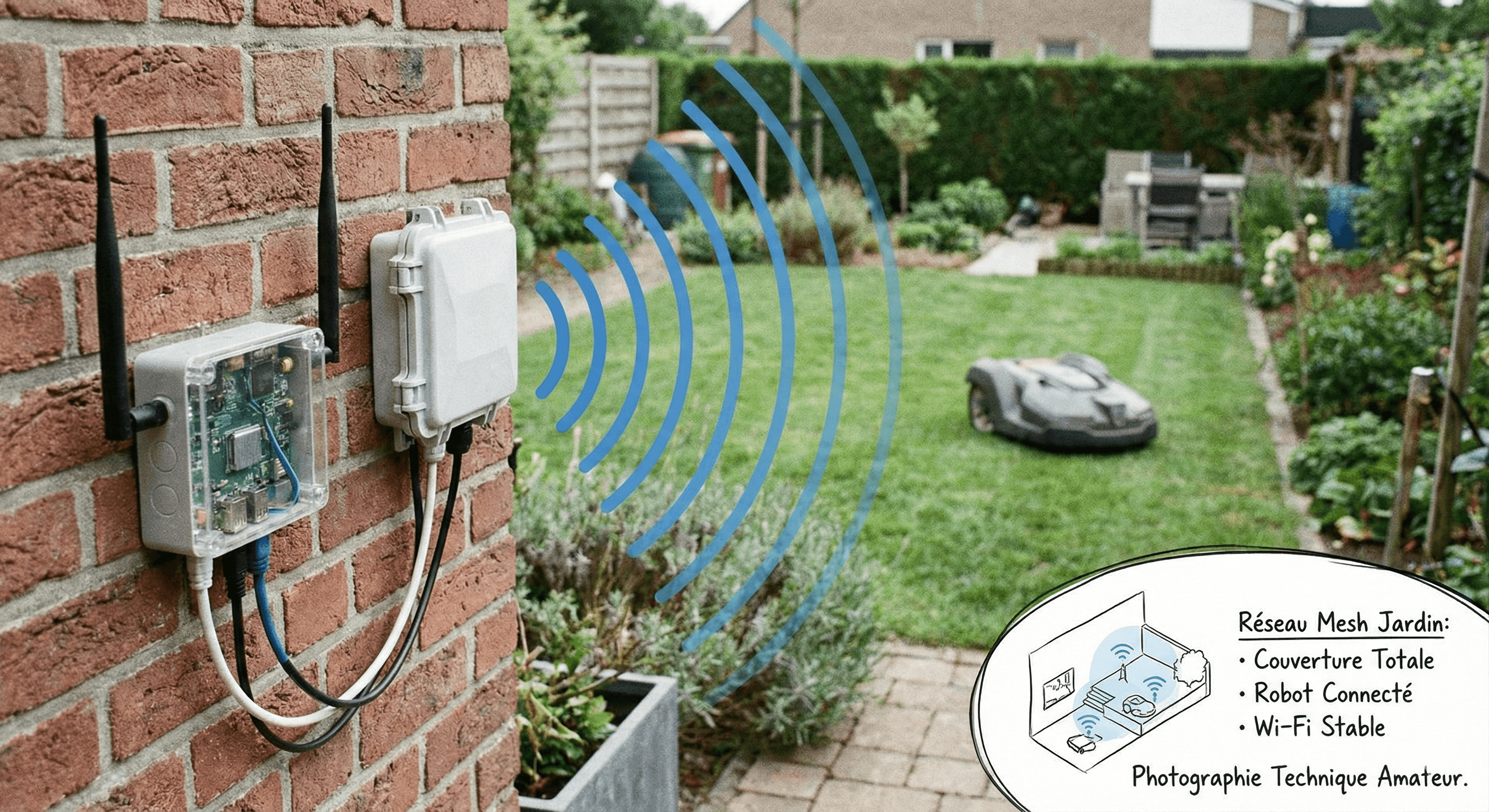
Improving Wi-Fi Coverage for Robot Mowers and Sensors in a Large Garden
Simple solutions and tests to avoid connection loss for robot mowers and outdoor sensors — mesh, repeaters, and best practices.