Which Robot Mower for Steep Slopes (>45%)?

Warning: Mowing a slope of more than 45% requires specific equipment. A standard mower risks slipping, damaging your lawn, or getting stuck.
Which Robot Mower for Steep Slopes (>45%)?
If your garden looks more like a ski slope than a football field, you've probably already given up on the idea of mowing it yourself. It's exhausting, and sometimes even dangerous.
The good news? Robot mowers have made spectacular progress. The bad news? 90% of models on the market are incapable of handling a slope greater than 35% (approx 20°).
In this guide, we will see which robots are truly capable of climbing walls (or almost) and how to choose the right model for your "alpine garden".
The Golden Rule: Max Slope vs. Boundary Slope
Do not confuse these two specs:
- Max Slope: This is the robot's ability to climb a hill in the middle of the lawn. It has momentum and room to maneuver.
- Boundary Slope: This is the ability to handle the slope where the terrain ends (near the boundary wire or virtual limit). This is much harder because the robot must stop, turn, and start again without sliding out of the zone.
[!WARNING] If your slope ends abruptly (wall, drop-off, pool), leave a safety margin of 1m or install a physical barrier.
The All-Terrain Champion: Mammotion LUBA 2 AWD 5000
If you are looking for the workhorse capable of crossing anything, look no further. The LUBA range from Mammotion has revolutionized the market with its All-Wheel Drive (AWD).

Mammotion LUBA 2 AWD 5000
La référence tout-terrain pour 5000m². 4 roues motrices, grimpe aux arbres (ou presque, 80% pente) et vision 3D.
Affiliate link. Price remains the same for you.
Why is it the best choice?
- All-Wheel Drive (AWD): Like a 4x4, all wheels turn. The grip is phenomenal.
- Slope up to 80% (38°): This is huge. Most competitors peak at 45% or 50%.
- Wireless: No need to lay a perimeter wire on the side of a hill (which is hell to do).
We watched it climb embankments that we struggled to walk up. It is impressive.
The Proven Premium Alternative: Husqvarna 430X NERA
If you prefer a brand established for 30 years and a network of physical dealers, Husqvarna remains the reference.
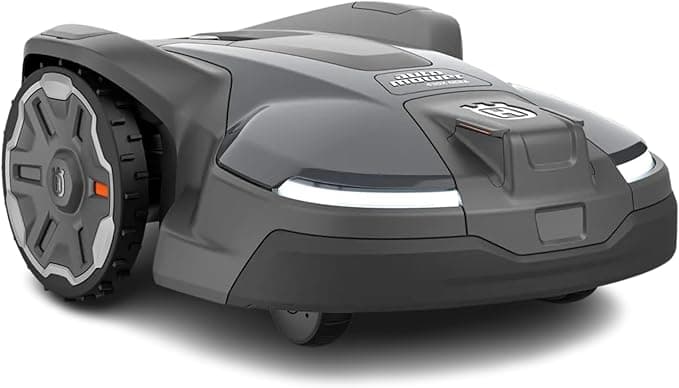
Husqvarna Automower 430X NERA
Le summum de la technologie pour les grands espaces (3200m²). Compatible EPOS pour une tonte sans fil (en option).
Affiliate link. Price remains the same for you.
The 430X (especially the NERA version) is an agile climber. Although it is rear-wheel drive, its design and weight balance allow it to reach 50% slope.
It is less than the LUBA, but sufficient for the vast majority of hilly terrains. The cut quality is surgical and it is nearly inaudible.
Comparison Table: The Climbers' Match
| Feature | Mammotion LUBA 2 | Husqvarna 430X NERA |
|---|---|---|
| Max Slope | 80% (38°) | 50% (27°) |
| Drive | All-Wheel Drive (AWD) | Rear-Wheel Drive |
| Installation | Wireless (RTK + Vision) | Hybrid (Wire or EPOS wireless) |
| Price | ~3000€ | ~3800€ (+ EPOS kit) |
Conclusion: Which one to choose?
- Pick the Mammotion LUBA 2 if you have an extreme slope (>50%) or very rough terrain with holes and bumps. It is the true off-roader.
- Pick the Husqvarna 430X if your slope is moderate (< 50%) and you prioritize long-term reliability, absolute silence, and local service.
Related Articles

Should You Optimize a Small 300m² Garden with a Robot Mower?
Is it worth buying a robot for a small area? ROI calculation and test of the Worx Landroid S300.
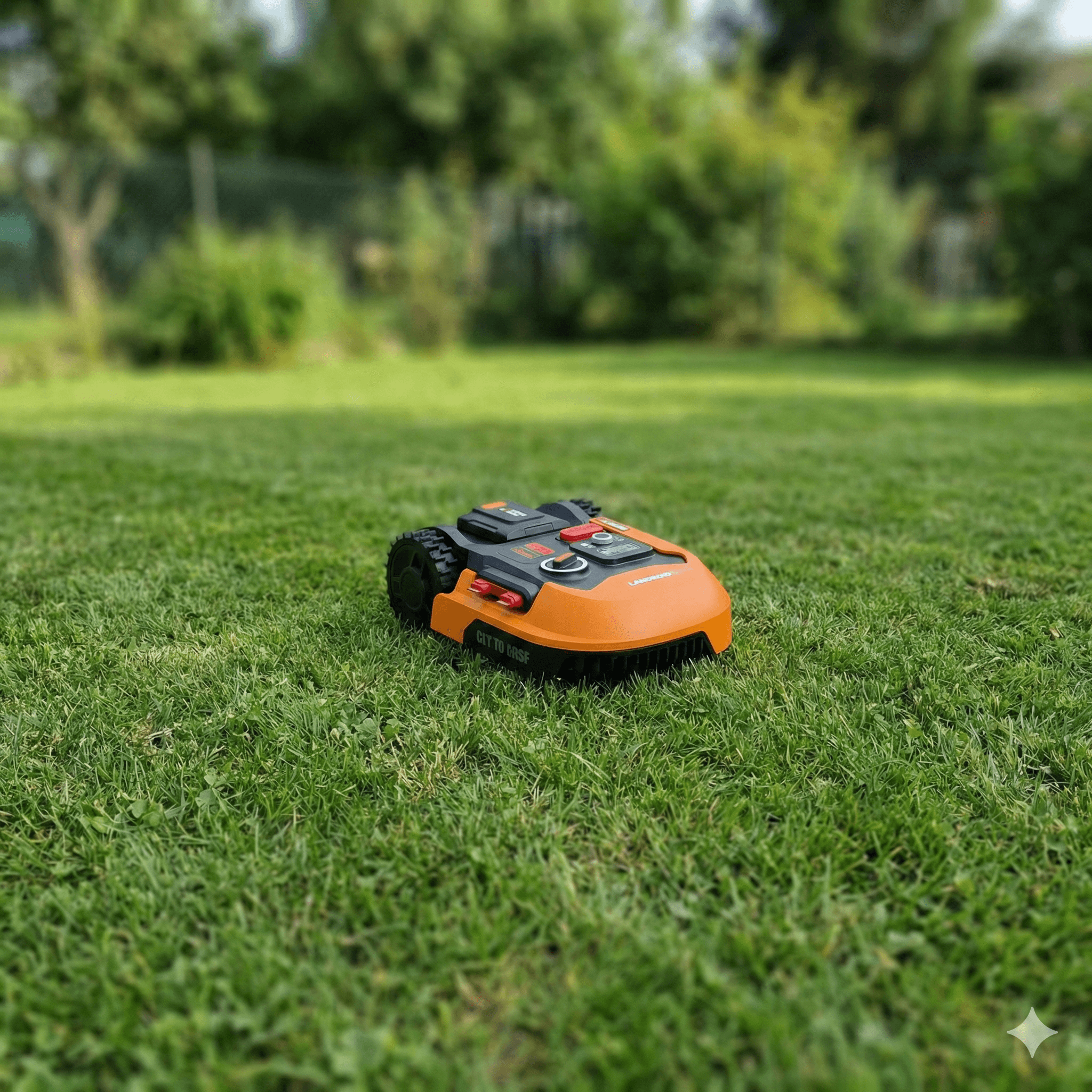
Worx Landroid M500+ Review: The Edge King?
With its Cut-to-Edge technology and optional modules, the Worx Landroid promises to reduce finishing work. Promise kept?

RTK, Vision, or LiDAR: Which Wireless Mower Technology to Choose in 2025?
No more boundary wire. But which technology to pick? GPS, Camera, or Laser? The ultimate guide.