Worx Landroid M500+ Review: The Edge King?
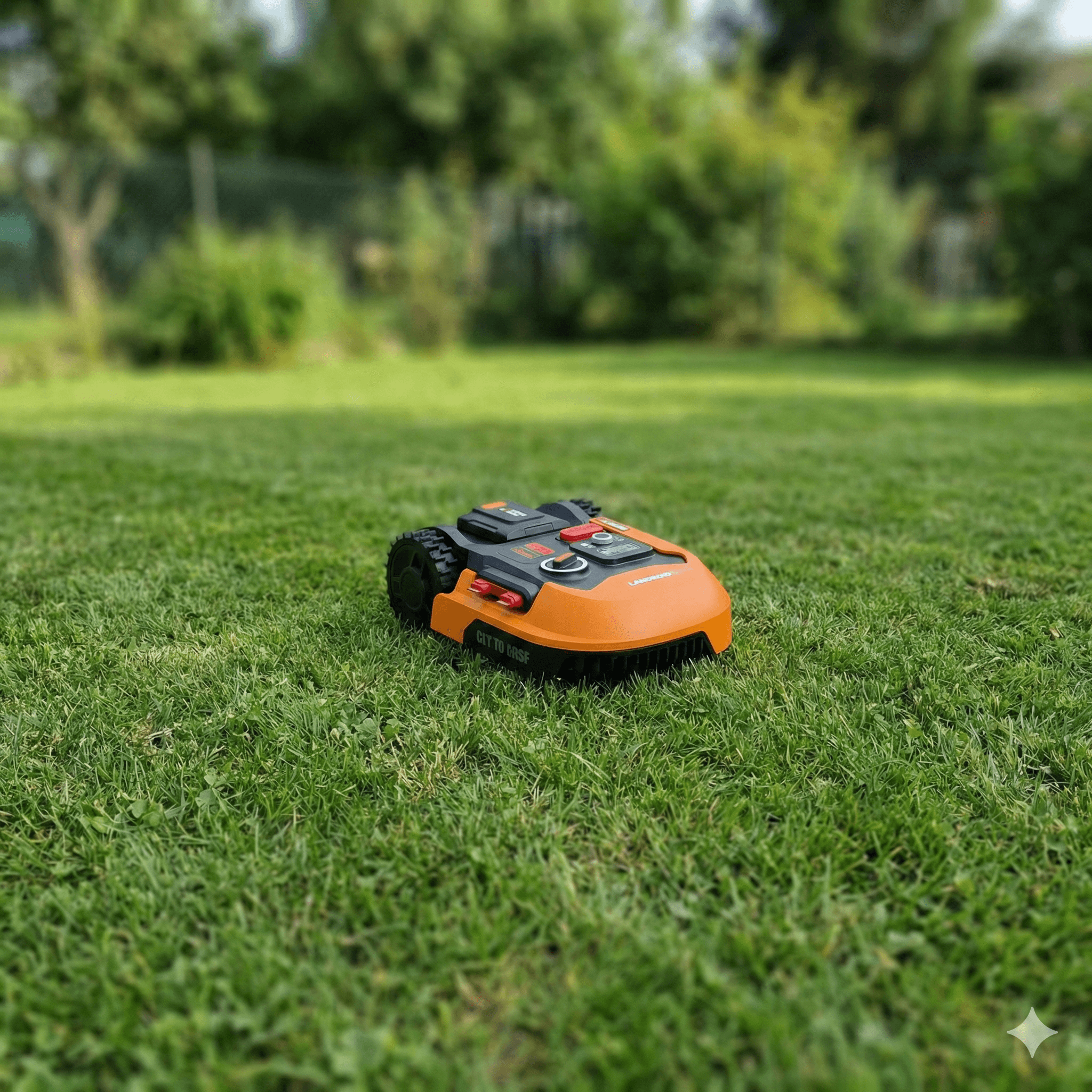
Test Worx Landroid M500+: My Full Review After 6 Months on Complex Terrain
In the competitive universe of robot mowers, we distinguish historic premium brands like Husqvarna, consumer references such as Gardena, and then there is Worx. With its aggressive design and its characteristic fluorescent orange color, the Landroid M500+ (WR165E) clearly plays the difference card. But what does it really have in its belly?
Beyond its marked aesthetics, this model has established itself as a bestseller for a very pragmatic reason: its promise to efficiently manage borders, the true Achilles heel of its competitors. I put this promise to the test on a demanding 400m² terrain, dotted with flower beds and delimited by concrete borders. Here is my detailed verdict.
The "Cut to Edge" technology put to the test
Most robot mowers position their blades in the center of the chassis for safety. While this configuration is reassuring, it inevitably leaves a strip of 10 to 20 cm of uncut grass along walls, requiring tedious manual finishing. Worx has chosen to offset its cutting disc to the right side to try to solve this problem.
In the field, the result is very convincing, although a nuance must be added. If your lawn borders a level terrace, the robot manages to mow the entire surface by encroaching slightly on the terrace. In this scenario, the result is perfect and requires no rework. On the other hand, along a wall, a small strip of about 4 to 5 cm remains. This is considerable progress compared to the usual 15 cm of a standard model, drastically reducing the time spent with the edge trimmer, even if it does not eliminate it totally. For this price range, it is a major technical advance.
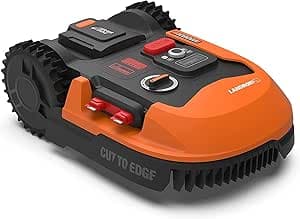
Worx Landroid M500 Plus (WR165E)
Le robot modulaire célèbre pour sa coupe des bordures (Cut-to-Edge). Idéal pour les terrains jusqu'à 500m².
Affiliate link. Price remains the same for you.
An intelligent modular ecosystem
The modular approach is the other great asset of Worx. Instead of imposing an expensive "all options" robot, the brand offers an accessible base (around 700€) that you can enrich according to your specific needs. I personally tested two modules that change the usage experience.
The first is the ACS (Anti-Collision System) module. Thanks to two ultrasonic sensors, it gives "eyes" to the robot, allowing it to spot and avoid obstacles like garden furniture or toys without hitting them. The efficiency is bluffing and preserves both your belongings and the robot's fairing. If your garden is lively and often cluttered, it is an almost indispensable investment.
I also tested the Off Limits module, which uses magnetic strips to be placed on the ground to create temporary exclusion zones. It is practical to protect a specific zone, like around a ping-pong table or a recent seeding, without having to redo all the boundary wiring. Although the cost is a bit high for the embedded technology, the flexibility it brings is appreciable.
Navigation, Intelligence, and Application
Unlike Gardena models, the Landroid does not rely on a guide wire to return to its base but follows the boundary wire. On a 500m² terrain, this is not problematic, but on very large surfaces, this could prematurely wear out the lawn on the periphery due to repeated passages in the same place.
The mobile application is a success. Modern and reactive, it offers a particularly relevant "auto-schedule" planner. This system automatically calculates the ideal mowing schedule based on the surface area, soil type, and even connects to Wi-Fi to adjust the program according to local weather. You really feel assisted in managing the garden.
Weak points to know
Everything is not perfect, however. My main complaint concerns the original drive wheels. Designed in hard plastic, they sometimes lack grip on wet grass or mild slopes. The robot can then slip, or even dig into the ground if it finds itself stuck. If your terrain is not perfectly flat, I strongly recommend opting for the weighted "all-terrain" wheels, available as an option, which effectively correct this defect.
The noise level is also a point to consider. Without being noisy, the Landroid makes itself heard a little more than its rivals from Husqvarna or Gardena, with a slightly more audible wheel motor whistling. Nothing prohibitive, but it is not absolute silence.
Final Verdict
The Worx Landroid M500+ stands out as the ideal robot for "DIYers" and owners of complex terrains. Packed with technologies and scalable, it offers with its edge cutting a real time saver on a daily basis. If your absolute priority is silence and biblical simplicity, you might be happier at Gardena. But if you are looking for a high-performance robot, capable of adapting to your garden and offering an aggressive price-quality ratio, the Worx is simply unbeatable.
Related Articles

RTK, Vision, or LiDAR: Which Wireless Mower Technology to Choose in 2025?
No more boundary wire. But which technology to pick? GPS, Camera, or Laser? The ultimate guide.
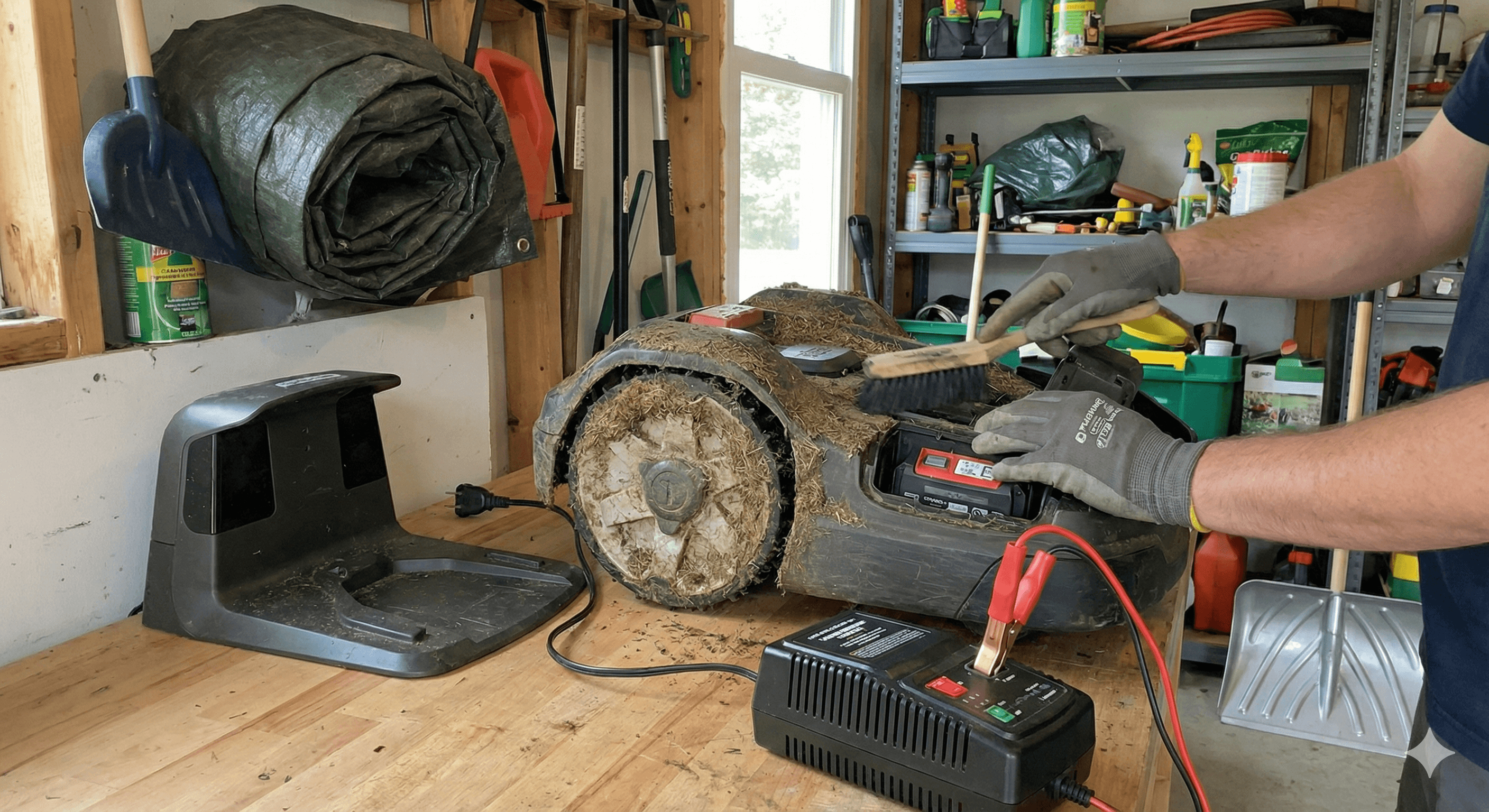
Robot Mower Winterization: The Guide to Save Your Battery
Winter is coming. Should you bring in the charging station? How to store the battery? Here is the checklist to find a functional robot in the spring.

Should You Optimize a Small 300m² Garden with a Robot Mower?
Is it worth buying a robot for a small area? ROI calculation and test of the Worx Landroid S300.