Robot Mower and Separated Zones: How to Handle Two Unconnected Lawns?
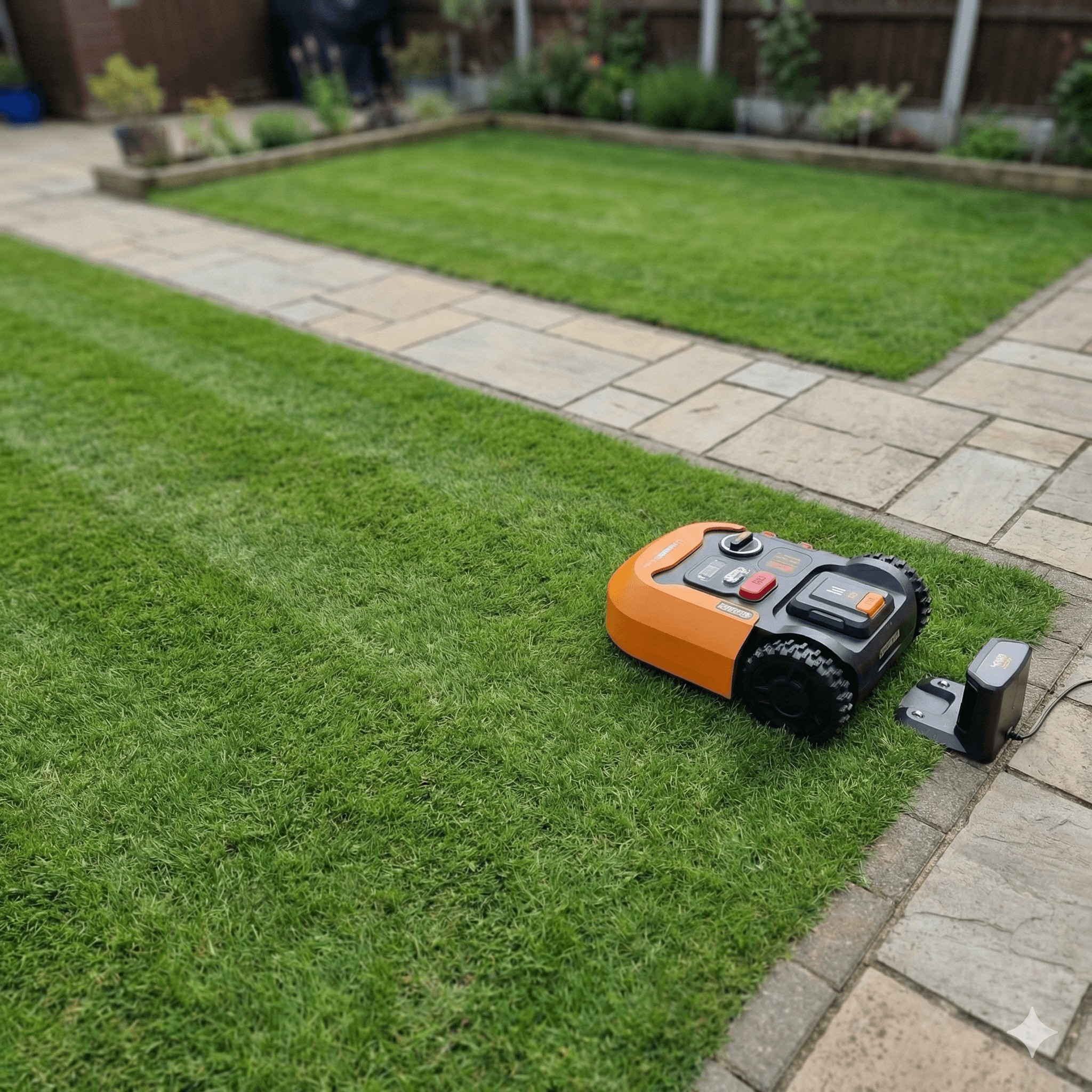
Robot Mower and Separate Zones: Managing Two Unconnected Lawns
This is arguably the most frequently asked question in my inbox: "I have a beautiful lawn in front of my house and another behind, but they are irremediably separated by a gravel driveway or a terrace. Am I condemned to buy two robots?"
Rest assured immediately, the answer is no. However, the technical solution to adopt will intimately depend on the configuration of your "separation zone". Installing a robot mower without thinking about this precise topographic detail is taking the risk of finding your machine stuck, wheels spinning in the gravel, or having to play carrier every morning. Let's explore together the three proven strategies for managing these famous "secondary zones".
The manual method: The "Secondary Zone" mode
This solution is the last resort, to be considered only if your two lawn zones are separated by obstacles impassable for a wheeled robot, such as a three-step staircase, a low wall, or a fence. Here, technology reaches its physical limits: the robot simply cannot move alone from point A to point B.
In this scenario, the installation still requires a certain rigor. You must surround the second zone with the same boundary wire that equips the main zone. The electrical loop must be uninterrupted: the wire starts from the main zone, crosses the obstacle (passing for example through a terrace joint or along a wall plinth), goes around the isolated zone, and returns to its starting point.
Daily use is simple but requires human intervention. You must physically carry the robot into the secondary zone, select the specific mode (often called "Secondary Zone" or "Manual Mowing") and launch it. It will then work until its battery runs out before stopping. You will then have to go get it to put it back on charge manually. It is a viable solution for a small annex surface of 50m², but which quickly becomes tedious for large grounds.
Total automation: Creating a passage corridor
This is the Holy Grail of the connected garden: doing nothing. If your two zones are on the same level (or connected by an accessible gentle slope) and simply separated by a driveway, bitumen, or slabs, total automation is possible.
The secret lies in configuring a smart passage corridor. The robot must understand that this is not a zone to mow, but a transit zone. For this, you will tighten the boundary wires to create a bottleneck. But be careful, the trick that many forget and which makes all the difference is the use of the guide wire.
Without this guide wire, the robot risks bouncing randomly in your driveway for 20 minutes before finding the exit, draining its battery unnecessarily. By installing a guide wire that crosses the driveway to link the two zones, the robot will follow this invisible rail directly and efficiently to the zone to mow.
Important technical note: For this method to work, ensure that your passage corridor has a minimum width of 60 cm between the boundary wires. Below this distance, most robots will refuse to engage in it for safety.
For this type of complex configuration, it is imperative to choose a robot capable of managing several programmable starting points along the guide wire, a standard feature on advanced models.
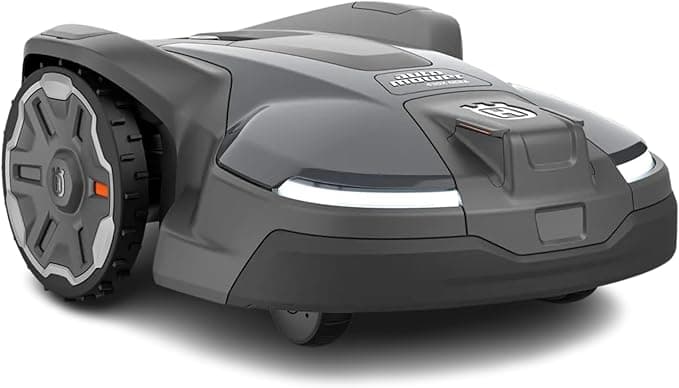
Husqvarna Automower 430X NERA
Le summum de la technologie pour les grands espaces (3200m²). Compatible EPOS pour une tonte sans fil (en option).
Affiliate link. Price remains the same for you.
This Husqvarna model is particularly recommended for this exercise because it perfectly masters automatic passage in narrow corridors thanks to its TargetHeight technology, avoiding leaving repetitive wheel tracks, which is crucial if your passage is grassed.
The high-tech solution: The wireless robot (RTK/GPS)
Finally, if the distance between your two zones is very important (more than 50 meters) or if the intermediate ground is impossible to wire (recent reinforced concrete, impeccable asphalt), the new generations of boundary wire-free robots working by satellite guidance (RTK/GPS) are a true blessing.
These technological jewels allow you to define virtual "transport zones" directly from the smartphone application. You draw the path on the satellite map, and the robot will cross this zone like a small autonomous vehicle, blades stopped, to join its work zone. It is a more expensive solution, but one that offers absolute installation flexibility.
Summary
Do not condemn your second lawn to become a wasteland. If you can create a flat passage at least 60cm wide, automation is within reach with a well-configured standard model. Otherwise, prepare yourself for a little exercise or invest in wireless technology!
Related Articles
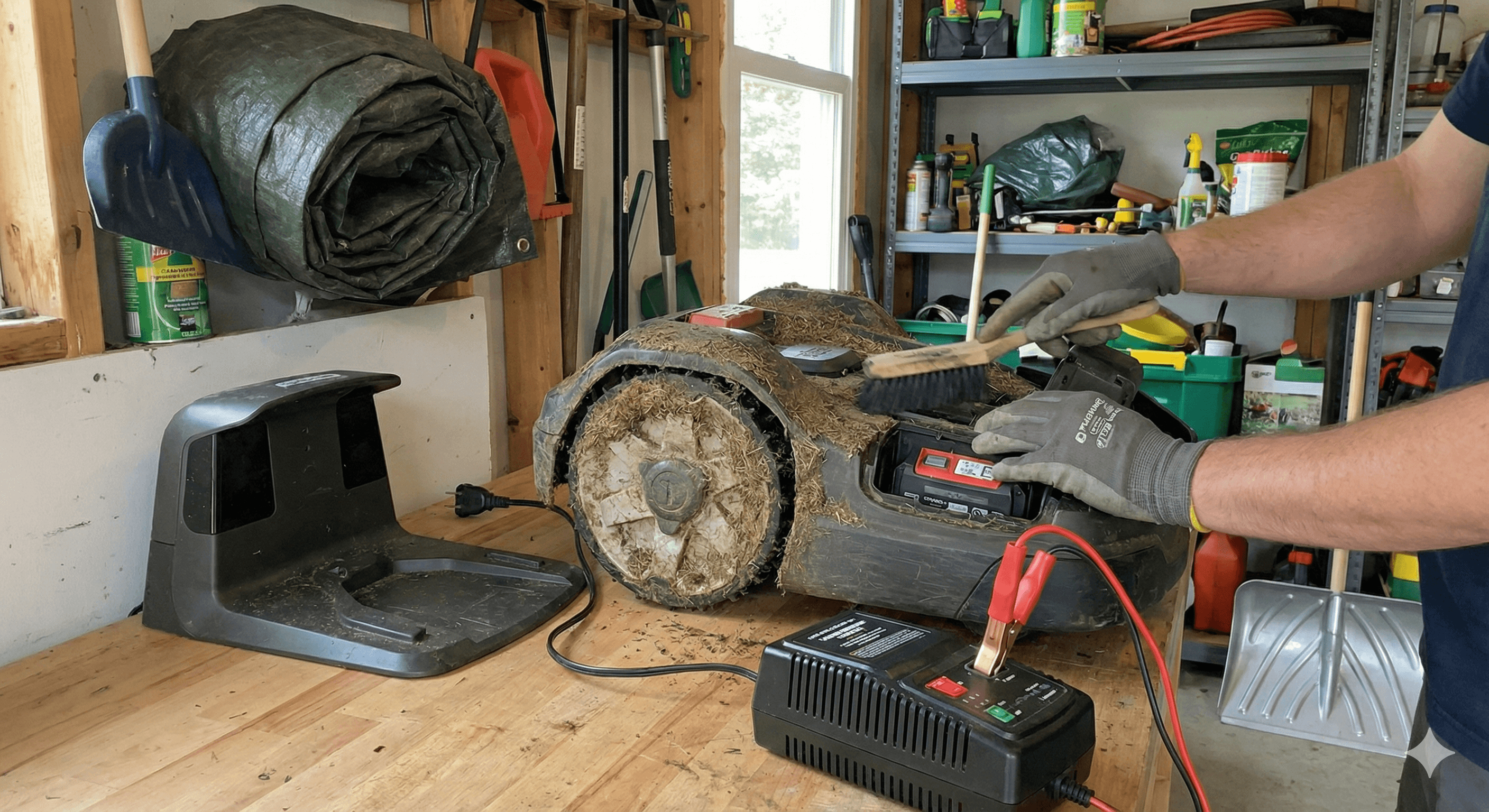
Robot Mower Winterization: The Guide to Save Your Battery
Winter is coming. Should you bring in the charging station? How to store the battery? Here is the checklist to find a functional robot in the spring.

Which Robot Mower for Steep Slopes (>45%)?
Does your garden climb like a ski slope? Discover the 4WD robots capable of conquering gravity.

RTK, Vision, or LiDAR: Which Wireless Mower Technology to Choose in 2025?
No more boundary wire. But which technology to pick? GPS, Camera, or Laser? The ultimate guide.