Top 7 Essential Sensors for a Smart Vegetable Garden (Moisture, EC, Rain Gauge...)
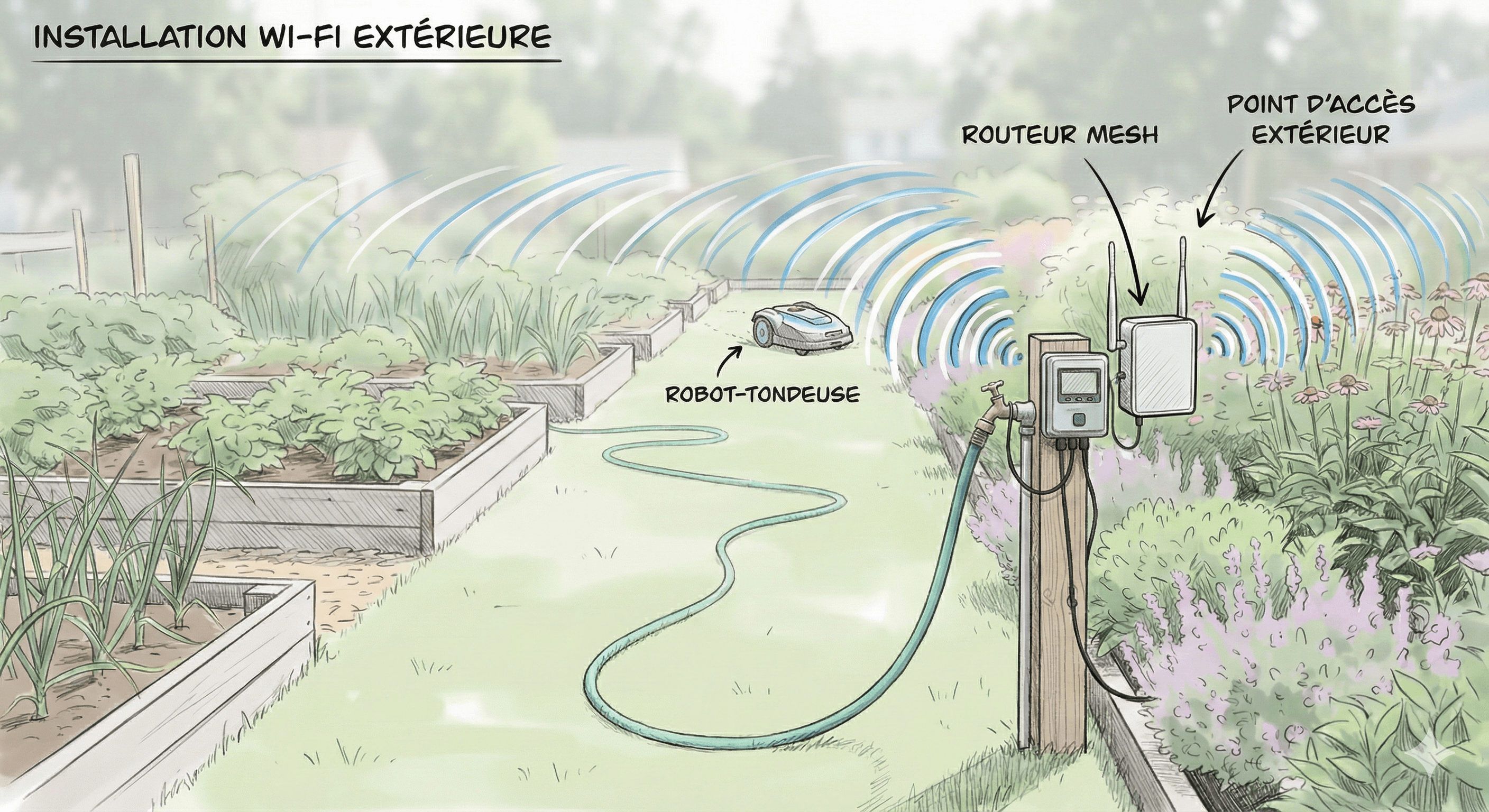
Practical comparison to choose the sensors that bring a real gain to the vegetable garden.
Top 7 Essential Sensors for a Connected Vegetable Garden
A productive vegetable garden is better managed when you know precisely what the plants are feeling. That is the promise of the connected garden: replacing the "wet finger" with reliable data. But faced with the jungle of available options, it is easy to get lost. Here are the seven sensors that really change the game, explained simply with their uses, expected precision, and the budget to foresee.
Summary Table
| Sensor | Main Use | Expected Precision | Indicative Budget |
|---|---|---|---|
| Soil Moisture Probe | Detect root hydration | Medium (resistive) to High (capacitive) | 20–80 € |
| EC Probe (Conductivity) | Monitor fertility and salinity | High (±0.1 mS/cm) | 50–150 € |
| Connected Rain Gauge | Measure local rain | High | 40–120 € |
| Temperature / Frost Sensor | Anticipate frosts | Very High | 20–60 € |
| Light Sensor (PAR) | Manage shading and photosynthesis | Medium/High | 30–120 € |
| pH Probe | Measure soil acidity | Variable (calib. required) | 40–200 € |
Detailed Analysis of Sensors
1. Soil Moisture Sensor: The Absolute Base
This is undoubtedly the first investment to make. Its role is to measure the quantity of water available where it really counts: at the root level. For lasting reliability, imperatively favor capacitive probes. Unlike old resistive probes (the two nails planted in the ground) which end up corroding quickly, capacitive technology measures the change in electric field without direct metal/water contact. Plant them at a depth of 10 to 20 cm for most vegetables. A single well-placed probe in a representative zone is often enough to control an entire watering zone.
2. The EC Probe (Electrical Conductivity)
Less known to the general public but venerated by pros, the EC probe measures the richness of your soil. Concretely, it evaluates the quantity of dissolved salts (nutrients) in the soil water. It is a valuable indicator to know if your plants have enough "to eat" or if, on the contrary, you have been too heavy-handed with fertilizer, risking burning the roots. It is an indispensable tool for intensive vegetable gardens or greenhouse cultivation.
3. The Connected Rain Gauge
Knowing that it is raining "in your city" thanks to a weather app is not enough. Showers can be very localized. A connected rain gauge installed directly in your garden will give you the ground truth. It is the indispensable ally of your water saving: coupled with your watering timer, it will prevent unnecessary watering if the sky has already done the job.
4. The Temperature and Frost Alert Sensor
If the air temperature is a classic data point, the ground temperature is the one that decides the life or death of your early seedlings. Placed near the ground, in low areas where cold accumulates ("frost pockets"), this sensor can trigger an alert on your phone to warn you to cover your fragile plants before it is too late.
5. The Light Sensor (PAR / Lux)
Not all lights are equal for a plant. Advanced sensors measure PAR (Photosynthetically Active Radiation), that is to say, the precise part of the light that plants use for photosynthesis. This is particularly useful for determining the ideal location for a new growing bed or checking if a neighboring tree is not casting too much shade on your tomatoes.
6. The pH Probe
pH determines the capacity of your plants to absorb nutrients. A soil that is too acidic or too basic will block assimilation, even if you put fertilizer. It is a slightly more capricious sensor that requires regular maintenance (calibration), but which is formidable for diagnosing unexplained growth problems, especially for sensitive crops.
How to equip yourself according to your profile?
The choice of your weapons will depend on the size of your playing field.
For a small family vegetable garden (less than 20 m²), do not complicate your life. A good capacitive moisture probe coupled with a rain gauge constitutes the winning duo offering the best return on investment. You will avoid major watering errors for a controlled budget.
If you manage a medium surface (20 to 100 m²), or if you cultivate in a greenhouse, adding a soil/air temperature probe becomes relevant to manage intermediate seasons. The EC probe can start to be interesting if you fertilize regularly.
Finally, for a large intensive vegetable garden, the approach changes. We will aim for a complete ecosystem integrating humidity, temperature, EC, and pH, all fed back to a management central (logger) to have a surgical view of the health of your crops.
Conclusion
Investing in sensors is not a gadget for geeks, it is a way to listen to what your plants have to say. Start modestly with humidity, master this tool, and expand your arsenal as your expertise grows.
Related Articles
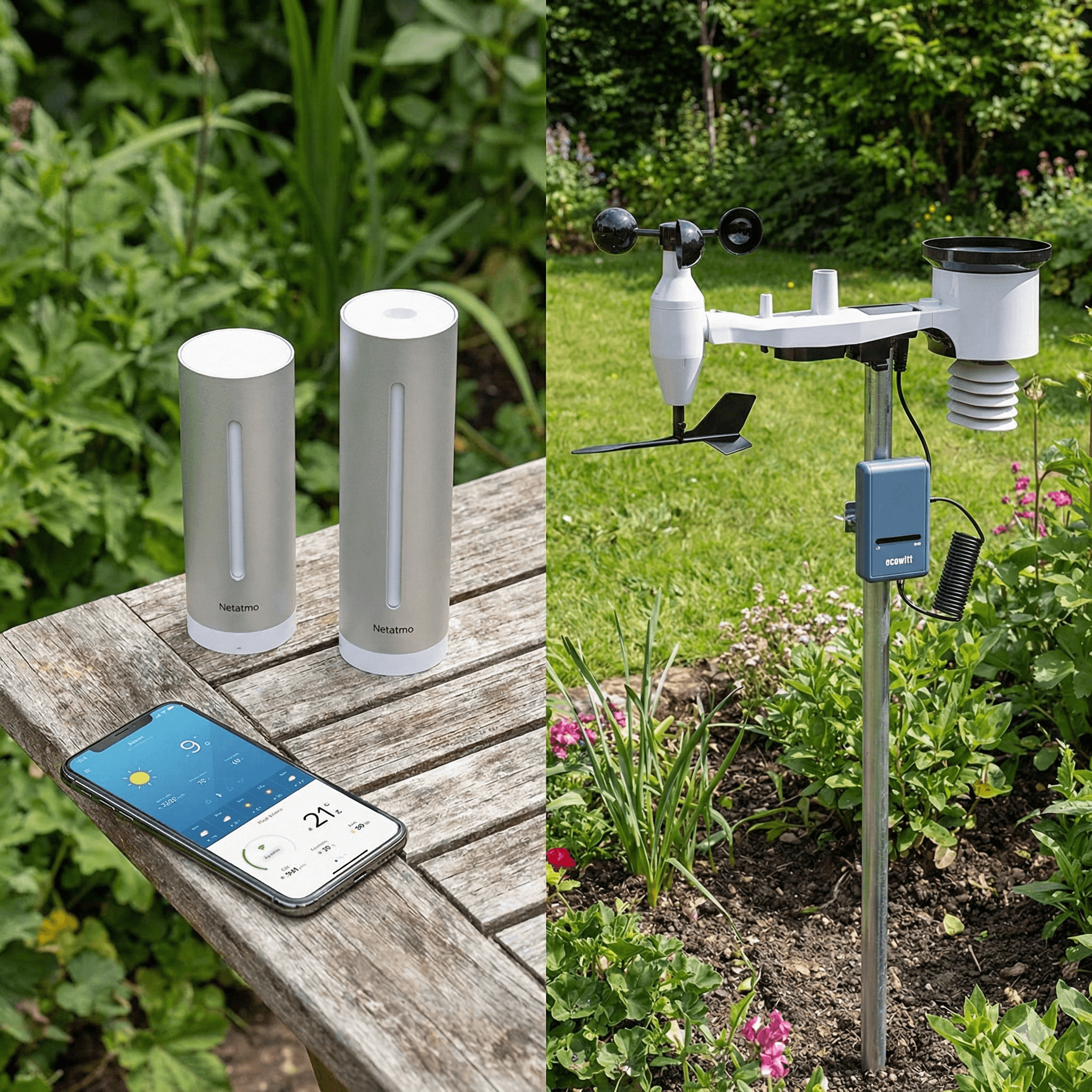
Netatmo vs Ecowitt: Which Weather Station to Control Your Irrigation?
Consumer design or scientific precision? Comparison of two approaches to monitor rain and temperature in your smart garden.